
Footsteps of Saint Paul
Antakya · Tarsus · Konya · Antalya · Kalkan · Pamukkale · Ephesus · İzmir
Send an enquiry
8 days / 7 nights
At a glance
Duration8 days / 7 nights
TransportFlight
GuideLocal guide
AccommodationHotels
Destinations
PamukkaleAntalyaAegean Coast
Day by day
Itinerary
-
Day 1 Hatay (Antakya)
Arrival in Antakya. Transfer to the hotel. Overnight in Antakya.
PAUL IN ANTIOCH:
The name Antioch derives from Antiochus, the father of Seleucus I, who was a contemporary of Alexander the Great. Thanks to its strategic location at the crossroads of Anatolia and the Middle East, Antioch has been home to many civilisations. After Rome, Alexandria and Ephesus, Antioch was the fourth largest city of the Roman Empire. It became the starting point of Paul’s journeys.
After their conversion to Christianity, Paul and Barnabas were visited by the Holy Spirit, who told them that their mission was to spread the name of Jesus Christ. This was the beginning of Paul’s years of travel. On his first journey, Paul and Barnabas set out from Antioch in AD 46, boarding a ship from Seleucia Pieria (Samandağ) to Cyprus. Antioch was also the starting point of his second and third journeys.
Places to visit:
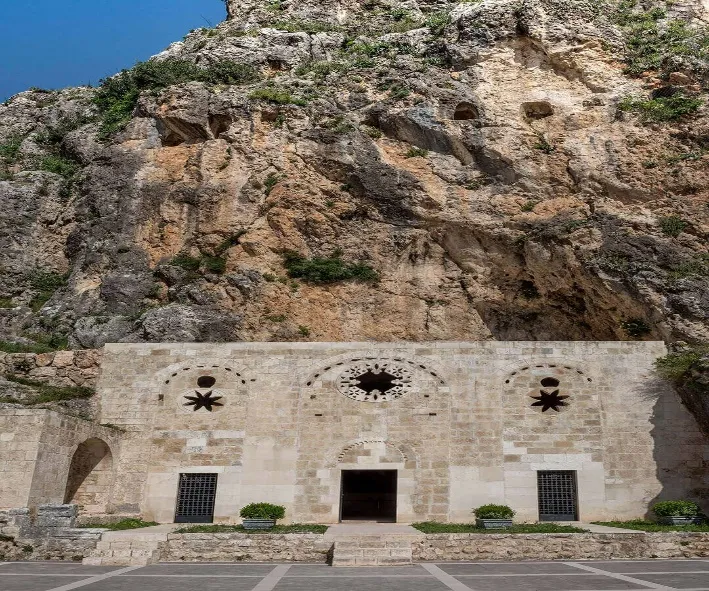
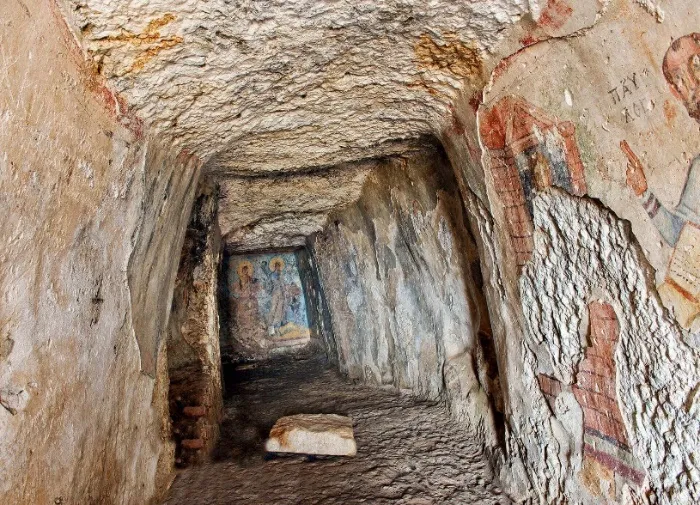
Cave Church of St. Peter: Located in the north-east of Antioch, it is the oldest church in the world. Here Peter and Barnabas prayed together with Paul. Peter was regarded as the head of the church. The first Christian gathering was held in this cave. For the first time in history, the name Christian was used here for the community of this church. Today there are remains of mosaics dating from the 5th century AD. To the left of the altar there is a tunnel, presumably intended to help church members escape in times of persecution. In the 11th century the church was extended by a few metres. In 1863 Pope Pius IX restored the church with the help of Napoleon III. In 1963 Pope Paul IV confirmed it as a place of pilgrimage for Christians. Every year on 29 June a religious ceremony is held in the church, attended by people from many different places.
Samandağ: The Monastery of St. Simeon was built on the highest peak of Samandağ in memory of Simeon, who patiently spent many long years living on top of a 13-metre-high column. The name Samandağ derives from Sam, the Arabic word for Simeon, so the name literally means Simeon’s Mountain.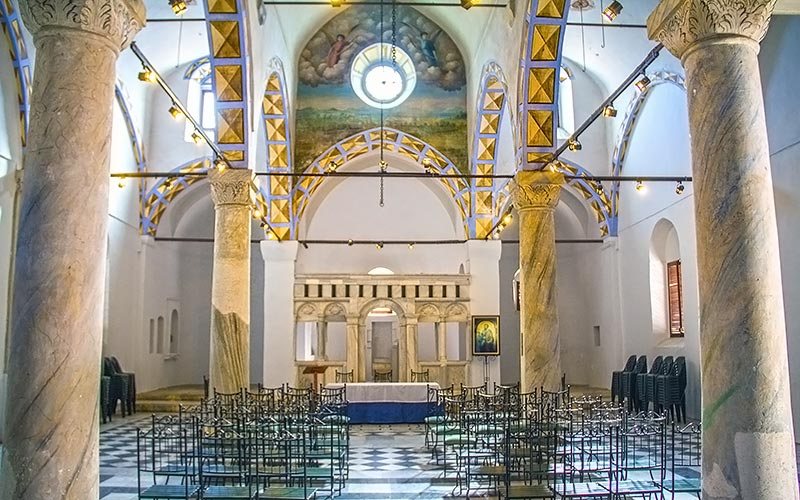
-
Day 2 Antakya-Tarsus-Kızkalesi 310 km
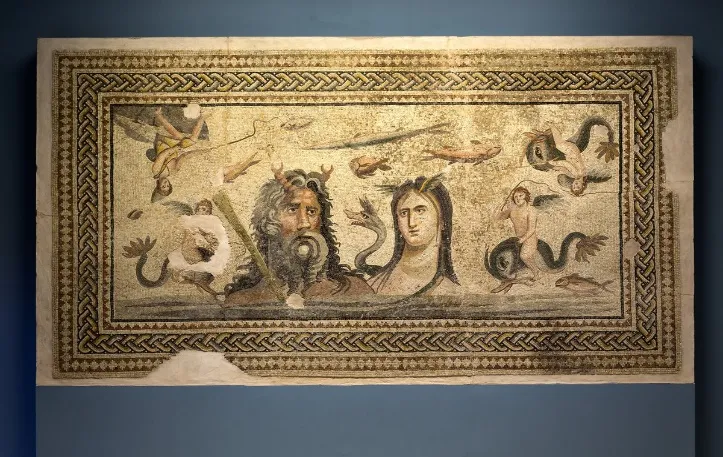
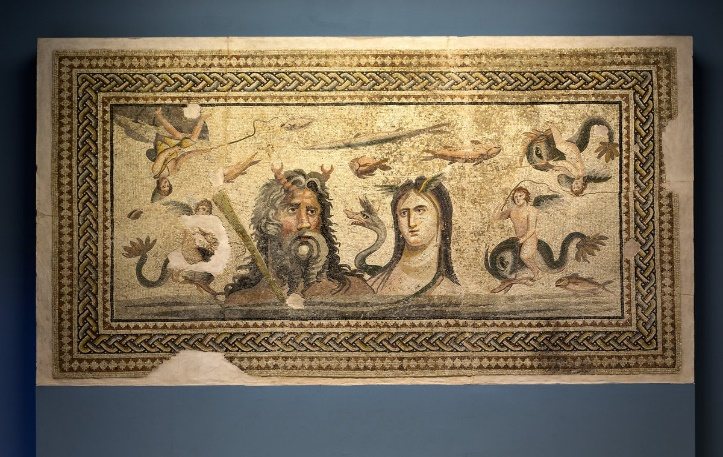
Sightseeing tour of Antioch, the place where the followers of Jesus were first called Christians. Here we will visit the Church of St. Peter, the cave church where the first Christians met in secret. In the new Antakya Archaeology Museum we will see one of the richest mosaic collections in the world.
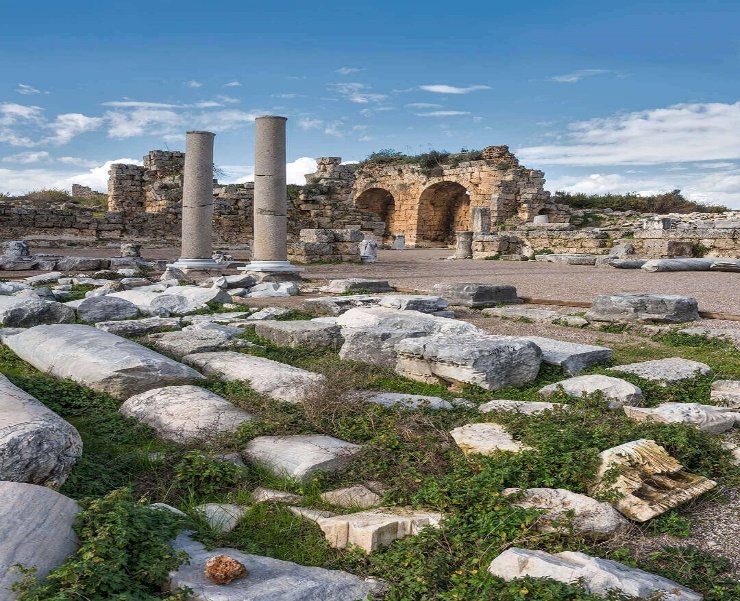
After lunch we depart for Tarsus, the home of the Apostle Paul. There we will visit the Roman baths and see the remains of the ancient bridge over the river Cydnus. Our next visit is the Cardo Maximus street of Roman Tarsus, followed by Donuktaş, one of the largest temples of the ancient world. After that we drive to
Kızkalesi. Dinner and overnight in Kızkalesi.
PAUL IN TARSUS
Tarsus is Paul’s birthplace. Tarsus is inscribed on the UNESCO World Heritage List. Places to see are:
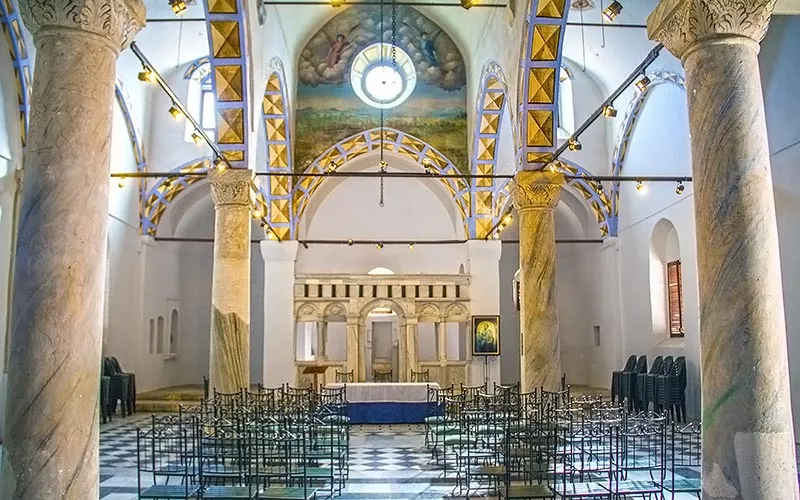
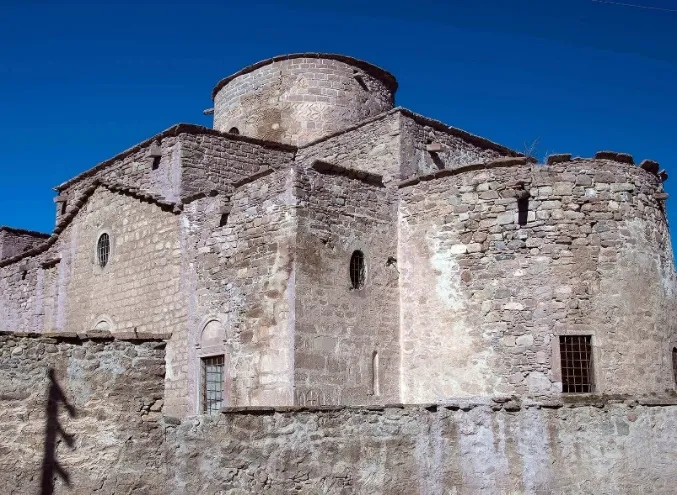
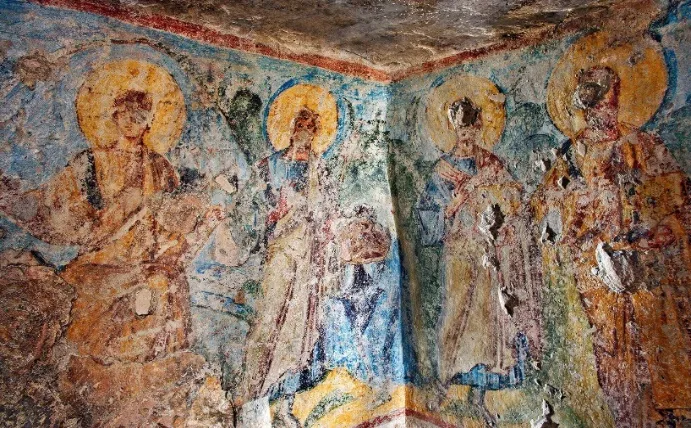
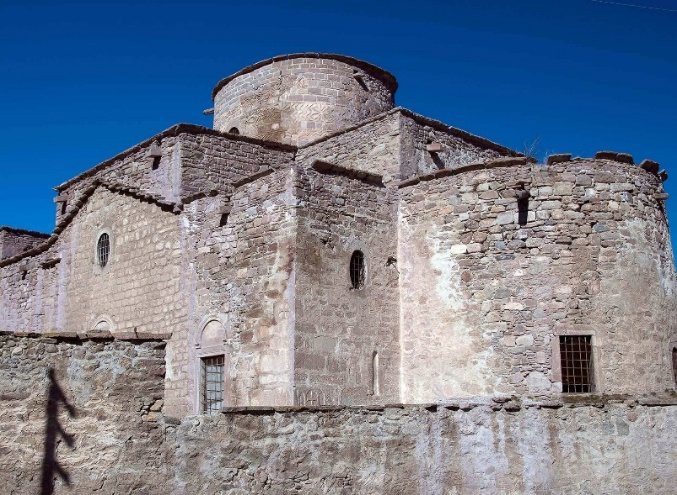
- PAUL’S CHURCH; Today serving as a monument museum, St. Paul’s Church is located in the Ulu Mosque quarter. The church dedicated to Paul was originally built in the 11th and 12th centuries and underwent major restoration in 1862. The frescoes depict Christ and the four Evangelists, with angels on the ceiling. The church hosted the "Symposium and Ceremony of St. Paul" organised by the Vatican in 1992–93.
- PAUL’S WELL; The ancient well from the courtyard of Paul’s house is located in the Kızılmurat quarter near Cumhuriyet Meydanı (Republic Square). The water level never drops, and the water is believed to be holy, with healing properties.
- THE ANCIENT ROAD; The road that Paul used on his journeys and while he lived in Tarsus is an ancient basalt-paved road that has survived to this day. It is located at Cumhuriyet Meydanı, 300 metres south of the well courtyard. Stepping onto this ancient road, you can travel back in time to the years when Paul lived.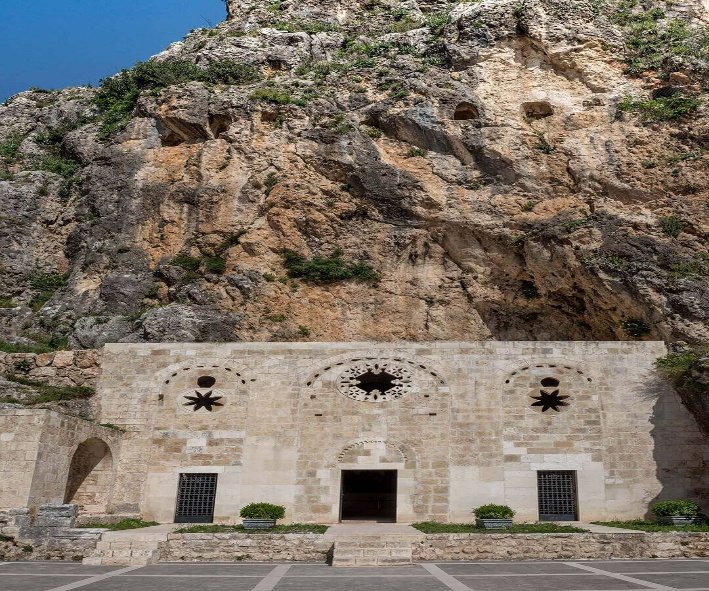
-
Day 3 Kızkalesi-Silifke-Alahan-Derbe-Konya 300 km
After breakfast we drive through the Cilician Gates in the Taurus Mountains and continue to Derbe, which Paul visited three times. Paul and Barnabas preached in Derbe and won many converts. We continue our drive to Konya. Dinner and overnight in Konya.
PAUL IN LYSTRA (HATUNSARAY) AND DERBE
Arriving in Lystra, Paul performed a miracle, giving the ability to walk to a man who had been crippled from birth and had never walked. The people of Lystra were so impressed by the miracle that they gave Paul and Barnabas the names of pagan gods, believing them to be those gods. They wanted to hold ceremonies at the city gates and sacrifice animals in their honour. Hearing this, Paul and Barnabas tore their clothes and went among the people, saying, "We are men like you, and we have brought you the Good News. Leave empty gestures like this and turn to the one God who created everything", and in this way they prevented the sacrifice. However, opponents of Christianity from outside the city won the people of Lystra over to their side, and Paul was stoned. Despite his serious injuries, he did not stop to recover, but went on with Barnabas to Derbe, where his words converted many people to Christianity. Derbe was the last stop of the First Journey. Paul also visited Lystra and Derbe on his Second Journey. In Lystra he found one of his greatest supporters, Timothy, whom he kept close to him, and together with
PAUL IN ICONIUM (KONYA)
After leaving Yalvaç and before crossing the Sultan Mountains, Paul and Barnabas reached Konya following the Eastern trade route and the Royal Road through Ilgın-Ladik. Konya was the place where they gave many moving speeches and managed to convert many people to Christianity. The most important of these was St. Thecla, who was deeply moved by Paul’s sermons and became one of the most prominent missionaries of Christianity. She was the first female martyr. While one group supported Paul, there was another group against him. When Paul heard that the other group was planning to attack them, Paul and Barnabas fled Konya for Lystra and Derbe.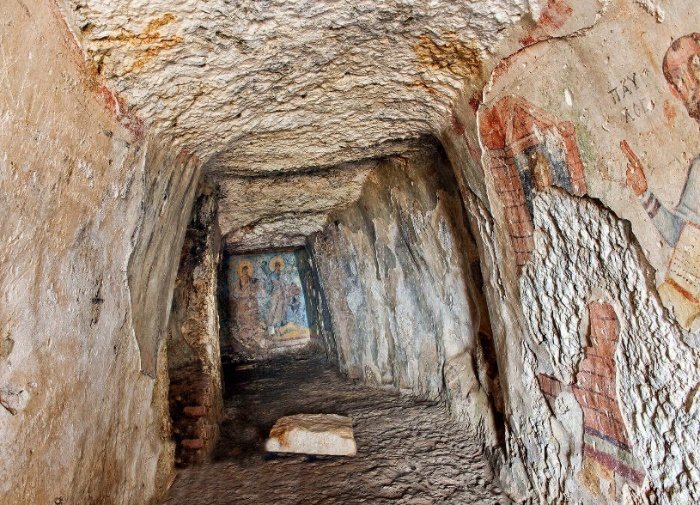
-
Day 4 Konya-Yalvaç-Eğridir-Antalya 360 km
We set off early for Yalvaç, the site of the Roman colony of Pisidian Antioch. Paul visited this city on all three of his missionary journeys. His first recorded sermon, in Acts 13, was addressed to a gathering of Jews and God-fearers in the synagogue. We will also visit the St. Paul room in the Yalvaç Museum. Then we will enjoy a scenic drive through the Turkish Lake District before descending through the Taurus Mountains to the plain of Pamphylia. Dinner and overnight in Antalya.
PAUL IN PISIDIAN ANTIOCH (YALVAÇ)
During his first journey, Paul visited Pisidian Antioch twice. Paul’s speech moved so many people that they wanted him to address them again. At his next sermon, almost the entire population of Pisidian Antioch gathered to hear him speak. As a result, many people converted to Christianity. However, some opponents of Christianity in the city grew angry with the newcomers and began to persecute Paul and Barnabas, and the two were driven out of the city. Despite this setback, Paul achieved his purpose and, leaving here for Iconium (Konya), left behind many new believers.
In Pisidian Antioch you can see the ruins of St. Paul’s Church, built in 325 on the site of the synagogue where Paul first preached. It is believed to be the first church dedicated to Paul. The floor is covered with remarkable mosaics. Among them you can also find the name of Bishop Optimus, who attended the Ecumenical Council held in Istanbul in 381. When Paul visited Pisidian Antioch in the 1st century, it had about 70,000 inhabitants and was one of the largest cities of the Roman Empire. Today you can also see the Temple of Augustus, the Theatre, the Monumental Fountain, the Roman Baths and the Yalvaç Museum.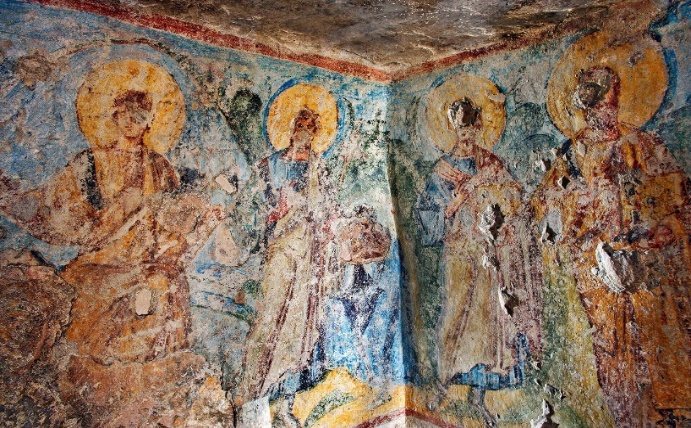
-
Day 5 Antalya-Perge-Myra-Patara-Kalkan 280 km
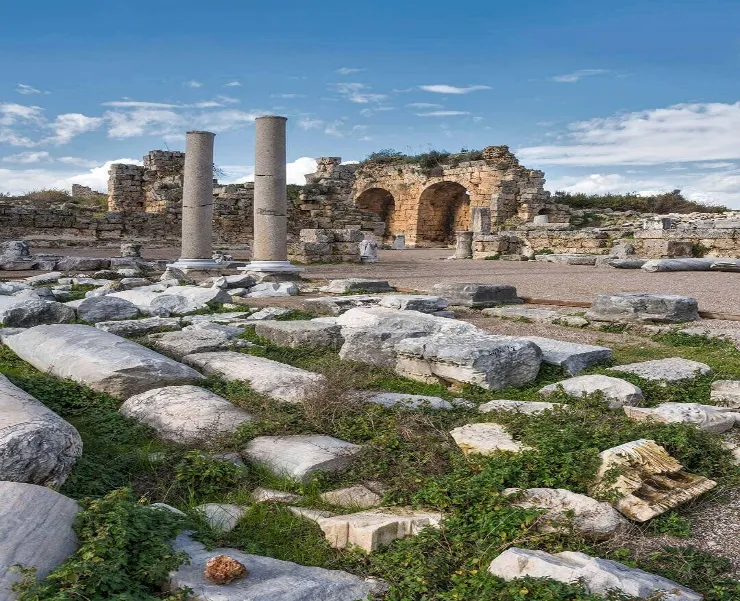
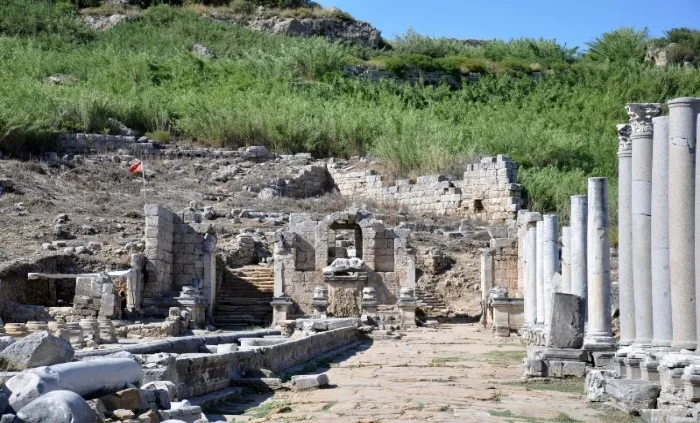
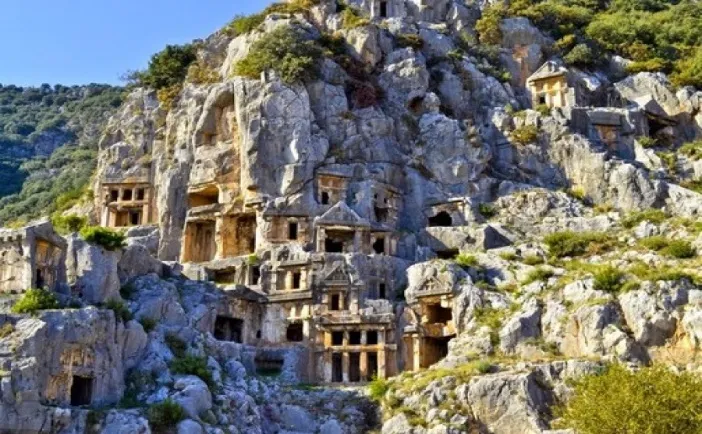
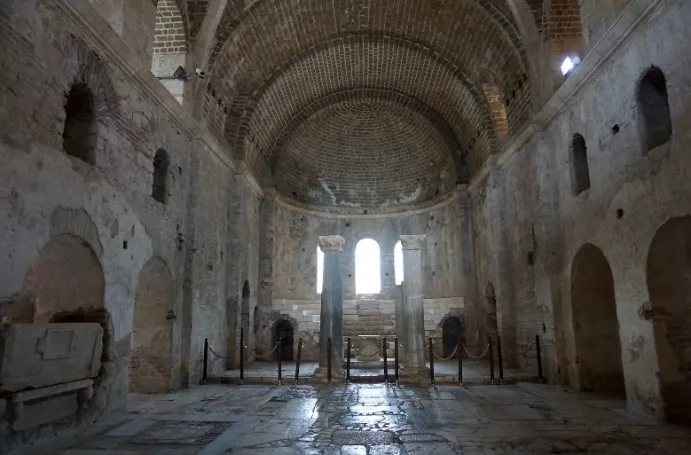
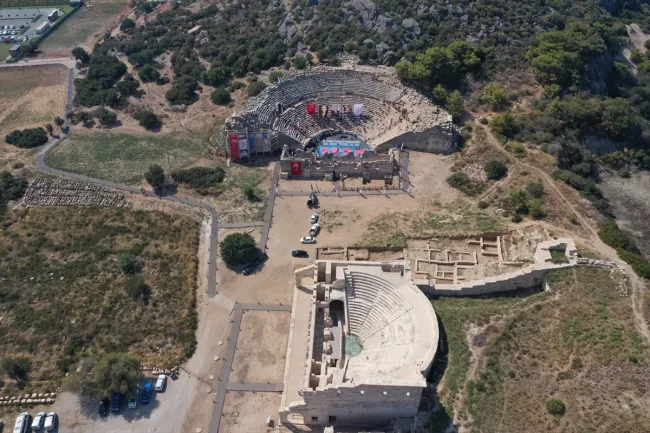
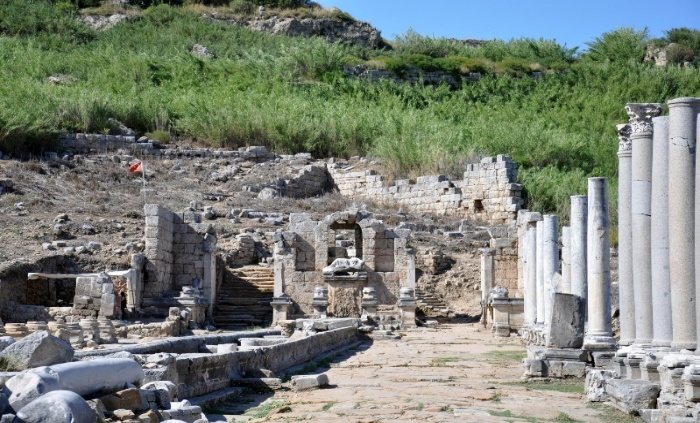
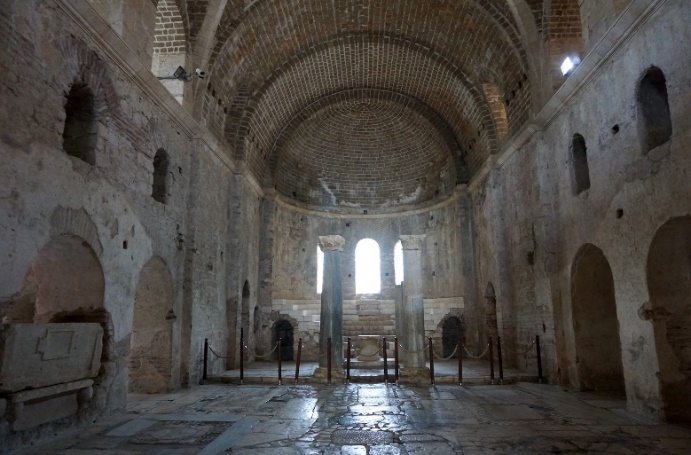
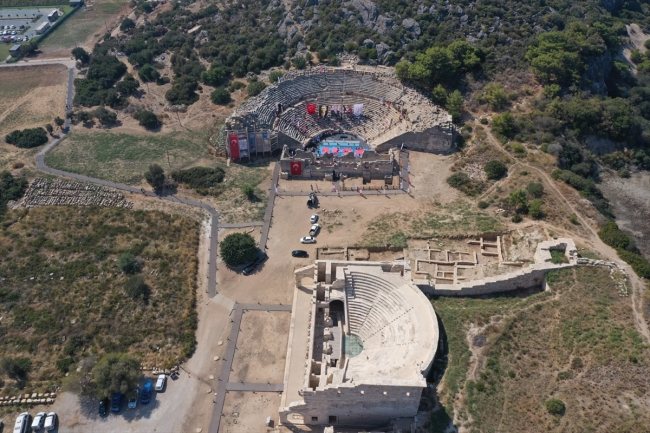
We begin with a visit to Perge, which Paul and Barnabas visited on their first journey (Acts 13:13–14). There we will see its well-preserved stadium and the colonnaded street divided by a water channel. After that we set off on a beautiful drive along the Mediterranean coast, past the ancient cities of Phaselis and Olympos. We will visit Myra with its fine Roman theatre and Lycian tombs. Myra is best known as the city of St. Nicholas, who served here as bishop in the fourth century AD. After visiting the Church of St. Nicholas, we take a short drive to Andriake, where Paul changed ships on his way to Rome (Acts 27:5). There we will visit the new Museum of Lycian Civilisations and the newly discovered Jewish synagogue. Dinner and overnight in Kalkan.
PAUL IN DEMRE
Demre was the first port where Paul’s ship called on the way to Rome.
Santa Claus was born in Patara, but served as bishop of Demre. St. Nicholas did what he could to help all people, not only children, as is believed today. The Christmas tradition of giving presents goes back to gifts being left at the doors of poor families in 270.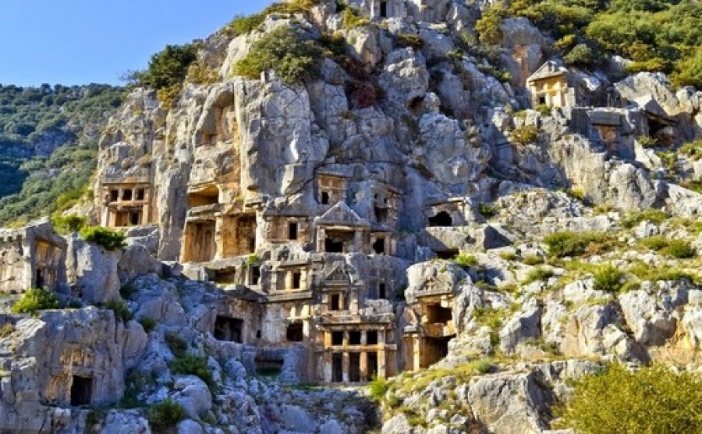
-
Day 6 Kalkan-Pamukkale 280 km
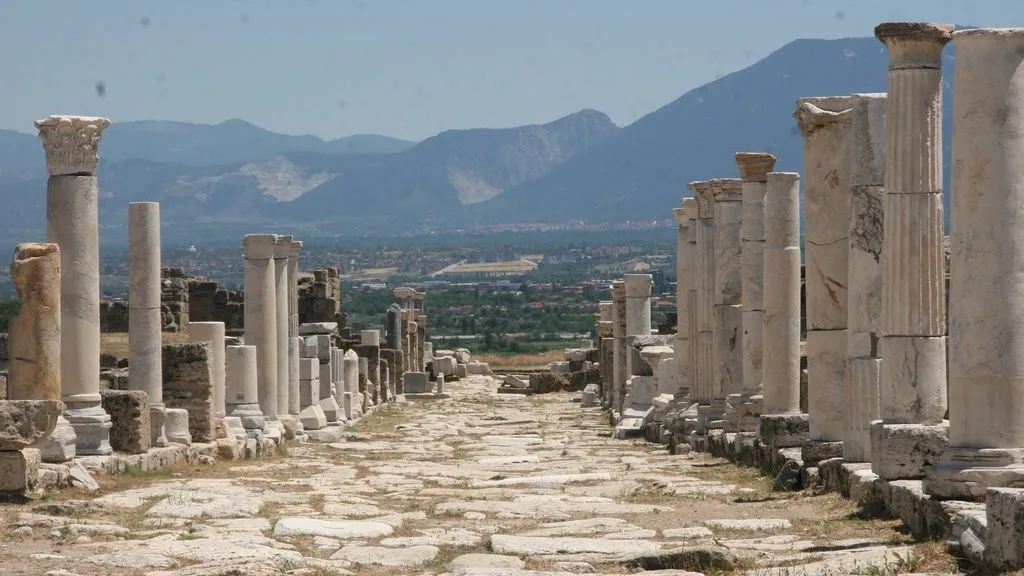
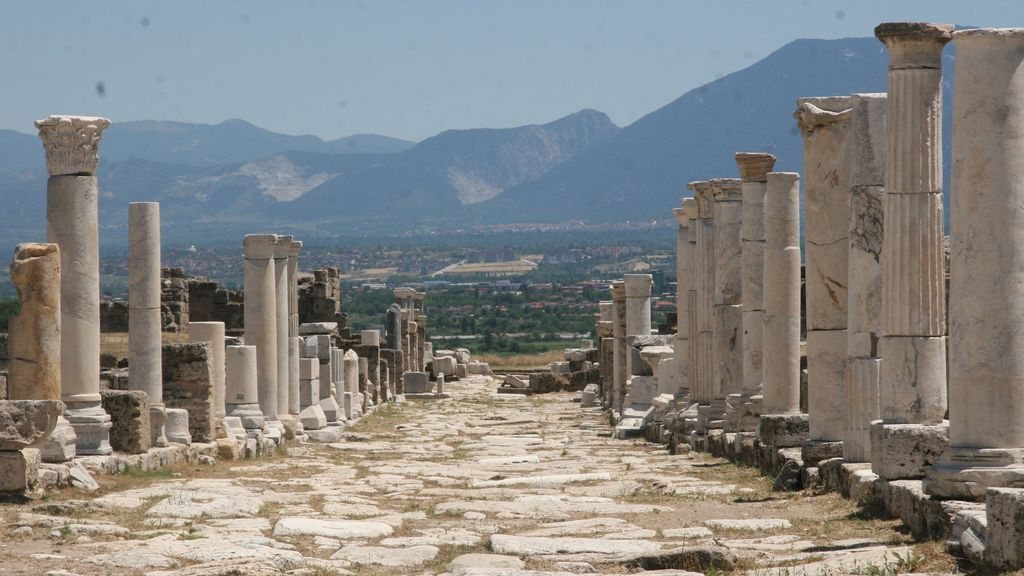
First we will visit Patara with its restored building and ancient lighthouse. Paul changed ships here on his third journey (Acts 21:2). Then we will drive inland again over the Taurus Mountains to Laodicea, one of the Seven Churches of Revelation (Rev. 3:14–22), which Paul also addressed (Col. 4:13–16). Next we drive to the unexcavated site of Colossae at the foot of Mount Honaz, to which Paul wrote the letters to the Colossians and to Philemon. Dinner and overnight in Pamukkale.
-
Day 7 Pamukkale-Ephesus-House of the Virgin Mary-Kuşadası 210 km
In Hierapolis we will walk through its extensive necropolis and then see the well-preserved theatre, as well as the Martyrium and Basilica of St. Philip. Later, travelling west through the fertile Meander valley, we will pass Tralles and visit Magnesia on the Meander. The churches in these cities, to which Ignatius later wrote at the beginning of the second century AD, were probably founded during Paul’s time in Ephesus.
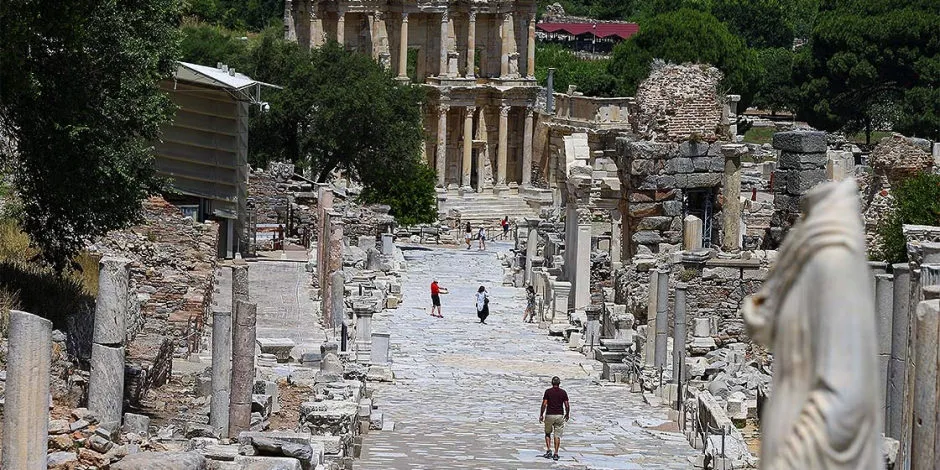
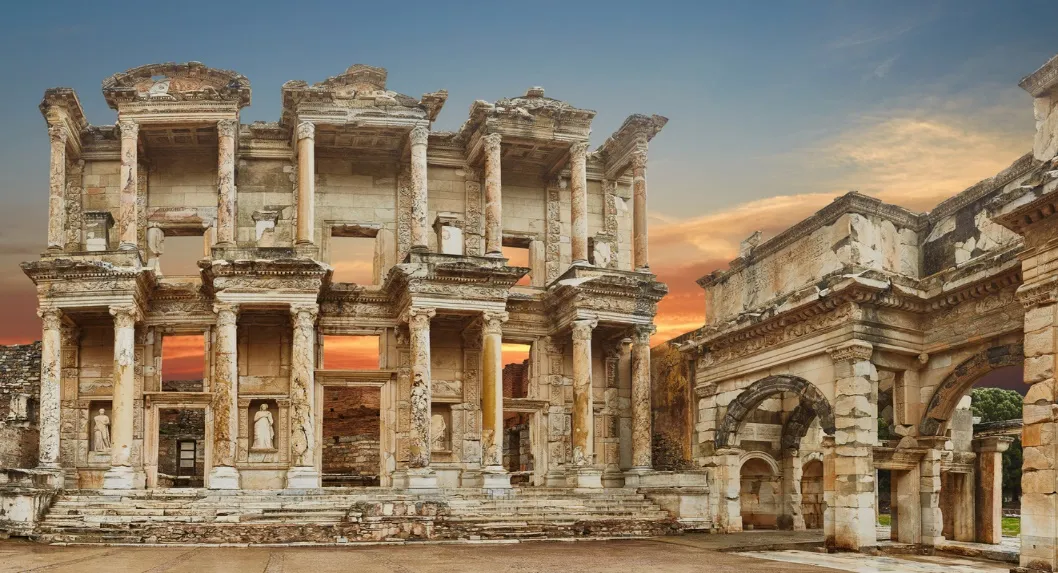
Today will probably be the highlight of the tour for most of the group, as we visit the impressive biblical site of Ephesus. You will set off on a walking tour that begins in the upper city at the State Agora and then descend to the famous Library of Celsus and the Tetragonos Agora. You will take a short detour to see the excellent Terrace Houses, where the rich and famous citizens of Ephesus lived. Your city tour ends at the theatre, where 24,000 citizens shouted "Great is Artemis!" in a riot that broke out in response to Paul’s ministry there (Acts 19:1–20:1). We will stop briefly to see the remains of the Temple of Artemis, once one of the Seven Wonders of the Ancient World. In the afternoon you will visit the Church of St. John, where tradition says the apostle and author of Revelation is buried. Dinner and overnight in Kuşadası.
PAUL IN EPHESUS
Paul’s first visit to Ephesus was during his second journey. Here Paul went into the synagogues and spoke on various subjects. When the Ephesians asked him to stay longer, he replied, "If it is God’s will, I will return to you." On his Third Journey, Paul stayed in Ephesus for three years, from 53 to 56. Here he wrote his epistles, which appear in the Bible, explaining God’s ordinances to the Ephesians, the Galatians and other communities. He spoke in the synagogues. He performed many miracles. These miracles greatly increased the respect in which Jesus and Paul were held. The followers of the pagan goddess Artemis were not pleased and did not allow Paul to speak in the Great Theatre of Ephesus. Paul left for Macedonia to win new disciples. When he returned from Macedonia, he summoned the elders of Ephesus to Miletus and, with a heavy heart and in tears, told them how he had served God and continued to spread the word despite all trials and tribulations. However, he told them that he had to go to Jerusalem.
Ephesus is an important city for Christianity. Home to one of the Seven Churches of Revelation, Ephesus is where the Third Ecumenical Council was held in AD 431. John the Evangelist, author of the Gospel, who was entrusted with conveying the messages to the first seven churches, lived here in Ephesus.
Cave of Paul and Thecla: This rock-cut cave lies on the northern slopes of Mount Bülbül. It consists of a corridor measuring 15 x 2 metres and a room connected to it. Near the entrance are depictions of Paul and Thecla. Inside there is an inscription reading "God, help your servant Timothy" and other inscriptions invoking Paul.
Church of St. John: John the Evangelist came to Ephesus with the Virgin Mary. Emperor Domitian wanted him executed, but he escaped every attempt on his life by performing a miracle. After spending some time in exile, he came to Ephesus, and he is believed to have died here. For this reason, the first monumental tomb dedicated to him was built here in the 2nd and 3rd centuries AD. In the 4th century AD, Emperor Justinian and his wife Theodora, who built Hagia Sophia in Istanbul, built a church over his tomb.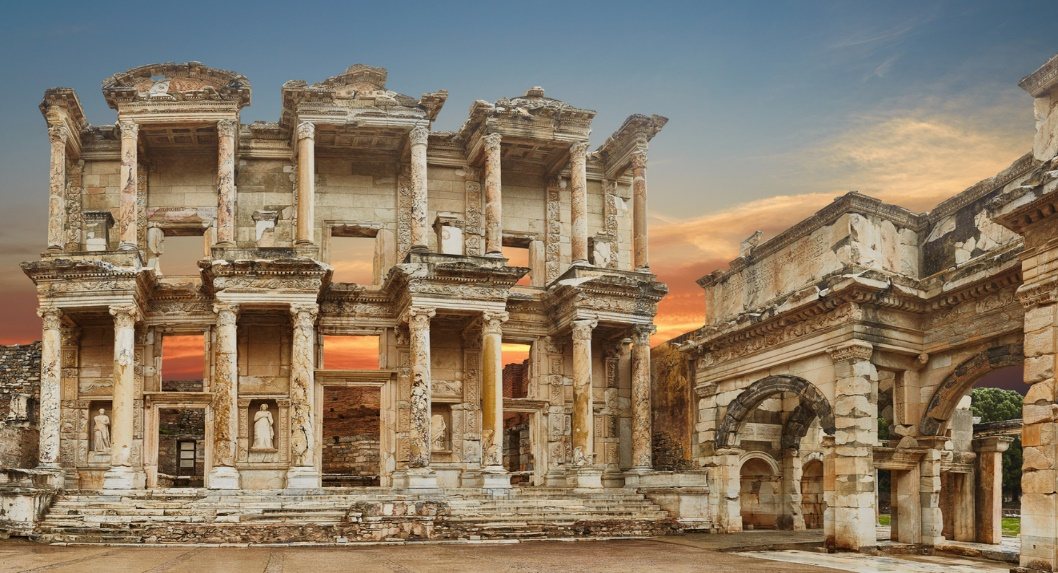
-
Day 8 Kuşadası-İzmir 80 km
Free time until the transfer. Transfer to the airport. Departure from İzmir.
Footsteps of Saint Paul
Send an enquiry
Interested in this journey? Send us an enquiry and we will get back to you with a tailored offer and available dates.
You may also like
Footsteps of Saint Paul8 days / 7 nights
Send an enquiry